

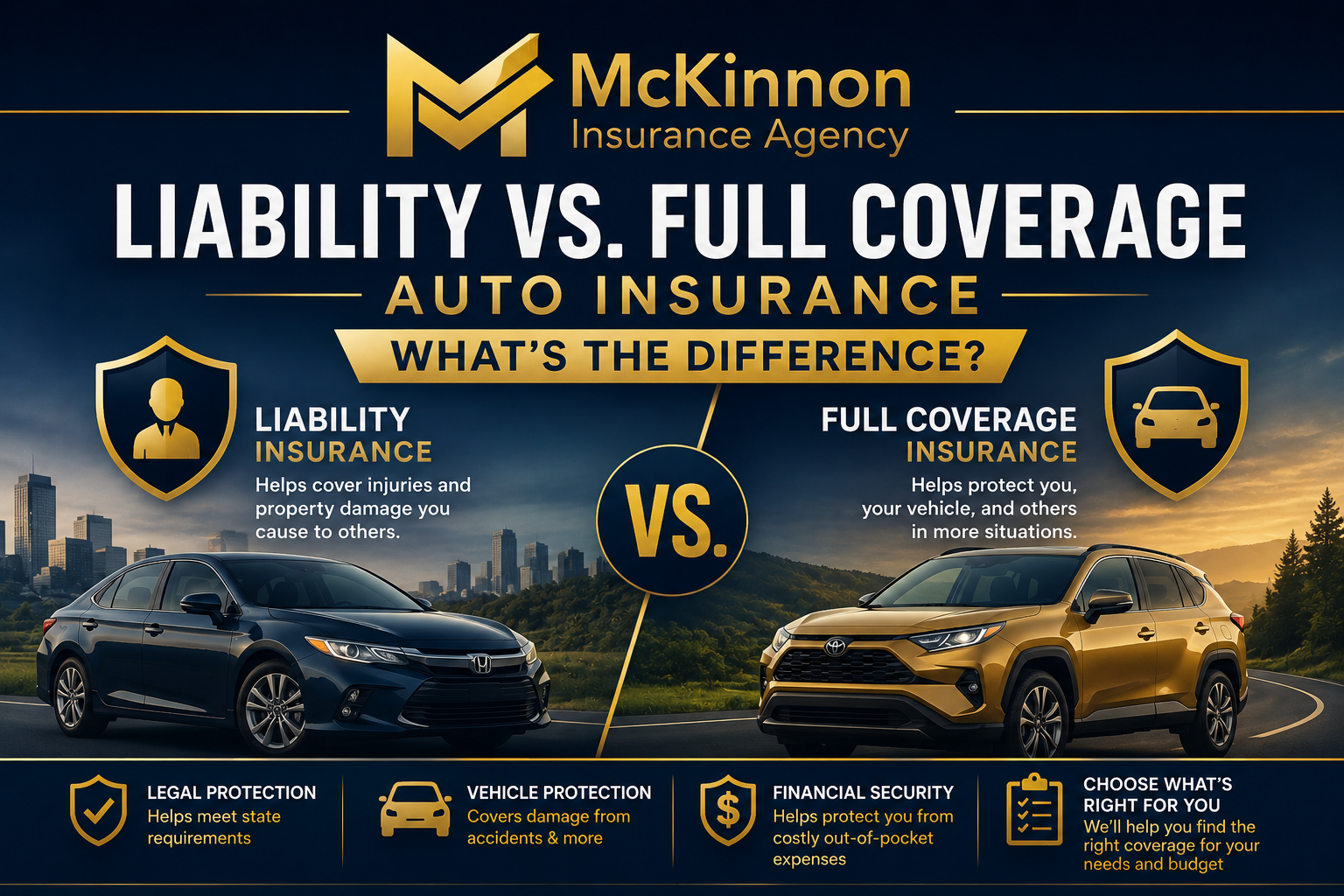
If you’ve been shopping for car insurance or reviewing your current policy, you’ve probably heard the terms “liability insurance” and “full coverage.” But what do they actually mean, and how do you know which option is right for you?
Many drivers are looking for ways to save money, especially as auto insurance rates have increased recently. One of the most common questions we hear is whether it makes sense to carry liability insurance or full coverage.
Understanding the differences between the two can help you make informed decisions and avoid costly surprises after an accident.
Let’s take a closer look.
What Is Liability Insurance?
Liability insurance helps pay for injuries and property damage you cause to others if you’re responsible for an accident.
Liability coverage is generally divided into two categories:
- Bodily Injury Liability
- Property Damage Liability
These coverages help protect you financially, but they do not pay to repair your own vehicle.
While Ohio’s minimum liability requirements satisfy state law, minimum coverage may leave you financially exposed after a serious accident. That’s why it’s important to understand what your policy does—and doesn’t—cover.
What Is Full Coverage Auto Insurance?
One of the biggest misconceptions in insurance is that “full coverage” is a specific type of policy. In reality, full coverage simply refers to a combination of coverages that typically includes:
- Liability insurance
- Collision coverage
- Comprehensive coverage
This combination helps protect not only other drivers but also your own vehicle.
According to the Insurance Information Institute, many consumers misunderstand what “full coverage” actually means and what protections are included.
What Does Collision Coverage Pay For?
Collision coverage helps pay for damage to your vehicle after:
- A collision with another vehicle
- Hitting a guardrail
- Striking a pole
- Rolling your vehicle
Collision coverage applies regardless of who caused the accident.
For many drivers, collision coverage provides peace of mind knowing their own vehicle is protected after an accident.
What Does Comprehensive Coverage Pay For?
Comprehensive coverage helps protect your vehicle from losses that aren’t caused by a collision.
Examples include:
- Theft
- Fire
- Vandalism
- Hail damage
- Falling objects
- Animal collisions
For example, if you hit a deer, comprehensive coverage may help pay for the damage. This is one reason many Ohio drivers choose full coverage, especially in areas where deer accidents are common.
What Doesn’t Full Coverage Cover?
Despite the name, full coverage doesn’t cover everything.
It generally does not pay for:
- Mechanical breakdowns
- Routine maintenance
- Tire wear
- Rental reimbursement (unless added)
- Gap insurance (unless added)
Understanding the limitations of your policy is just as important as understanding the protections it provides.
Who Should Consider Liability-Only Insurance?
Liability-only insurance may make sense for:
- Older vehicles with low market value
- Drivers looking to minimize premium costs
- Vehicles that could easily be replaced out of pocket
However, choosing liability-only coverage means you are accepting more financial risk if your vehicle is damaged or stolen.
Who Should Consider Full Coverage Insurance?
Full coverage may be worth considering if:
- You have a newer vehicle.
- You have a loan or lease.
- You couldn’t easily replace your vehicle after an accident.
- You want broader protection.
Although full coverage costs more, many drivers find that the additional protection provides valuable peace of mind.
There are also several car insurance discounts that may help offset the cost of carrying broader protection.
Is Full Coverage Required?
State law generally requires liability insurance, but full coverage itself is not legally required.
However, if you have a car loan or lease, your lender will usually require collision and comprehensive coverage until the vehicle is paid off.
Can Full Coverage Help Protect You Financially?
Many drivers focus solely on price when shopping for insurance. While saving money is important, it’s equally important to understand whether your policy adequately protects your assets and financial future.
Choosing the cheapest option isn’t always the same as choosing the best option. Finding the right balance between affordability and protection is one of the most important decisions drivers make.
What Should You Choose?
There is no one-size-fits-all answer.
The right choice depends on:
- Your vehicle
- Your budget
- Your financial situation
- Your comfort with risk
Every driver’s situation is different, which is why it’s important to review your coverage regularly.
The Bottom Line
There is no one-size-fits-all answer when it comes to liability versus full coverage auto insurance.
The right choice depends on your vehicle, your budget, and how much financial risk you’re willing to assume.
If you’re unsure which option is best for you, an auto insurance review can help you better understand your coverage and identify areas where adjustments may make sense.
At McKinnon Insurance, we’re committed to helping Ohio drivers make informed decisions and find the right balance between protection and affordability.


