

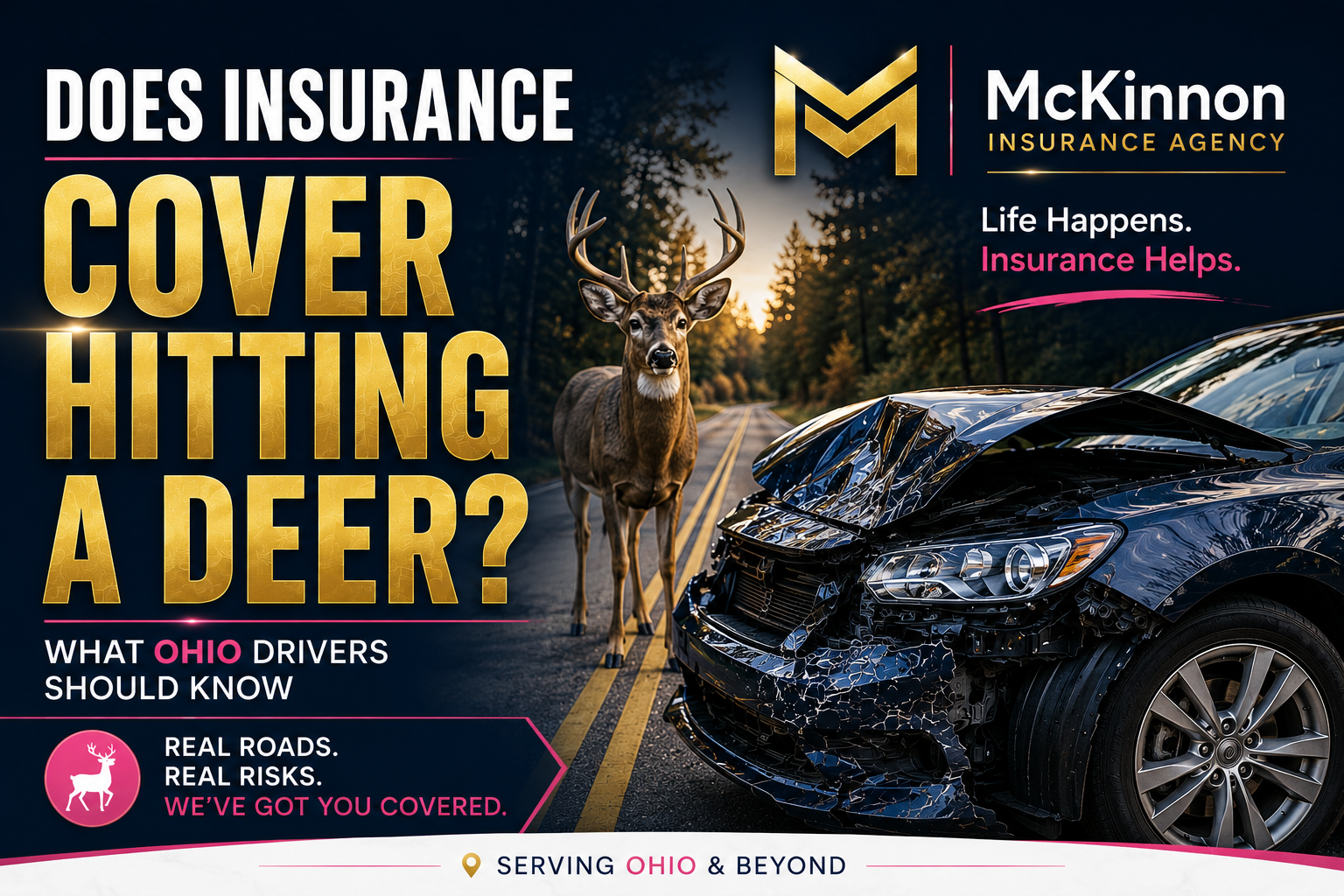
Does insurance cover hitting a deer? It’s one of the most common questions drivers ask after a wildlife collision, and the answer depends on the coverage you have before the accident happens.
If you live in Ohio, encountering deer on the road is simply part of driving—especially during the fall months, although deer-related accidents can happen year-round. A collision with a deer can leave you shaken, damage your vehicle, and leave you wondering what to do next.
Knowing how to respond after the accident—and understanding how your insurance may help—can make a stressful situation much easier to navigate.
What Should You Do Immediately After Hitting a Deer?
Your safety always comes first.
If you hit a deer:
- Pull your vehicle to a safe location if possible.
- Turn on your hazard lights.
- Check yourself and your passengers for injuries.
- Call 911 if anyone is injured.
- Stay away from the deer, even if it appears dead or injured.
According to the Ohio Department of Natural Resources, injured deer can become unpredictable and dangerous if approached.
Should You Call the Police?
If your vehicle has significant damage, someone is injured, or the deer is creating a hazard in the roadway, contact local law enforcement.
A police report may also be helpful during the insurance claims process by documenting what happened.
Even if the damage appears minor, it’s often worth asking whether a report should be filed.
Does Insurance Cover Deer Damage?
Many drivers assume hitting a deer is treated the same as hitting another vehicle.
Not necessarily.
How your insurance responds depends on the coverages included in your policy before the accident occurs.
That’s one reason it’s so important to understand your auto insurance before you ever need to use it.
If you’re unsure whether your current policy provides enough protection, our article How Much Auto Insurance Do I Need? can help you understand your options.
Should You File an Insurance Claim?
Every accident is different.
Before deciding whether to file a claim, consider:
- The amount of damage.
- Your deductible.
- The estimated repair costs.
- Your financial situation.
If you’re wondering whether filing a claim could affect your premium, our article Will Filing a Claim Raise My Insurance Rates? explains the factors insurance companies typically consider.
What If Your Vehicle Isn’t Safe to Drive?
A deer collision can cause damage that isn’t immediately visible.
Even if your vehicle still runs, problems with the steering, suspension, cooling system, or airbags may make it unsafe to continue driving.
If you’re unsure:
- Contact your insurance company.
- Arrange for a tow if necessary.
- Take photos of the damage before repairs begin.
If your vehicle is ultimately declared a total loss, our article What Happens If My Car Is Totaled? explains what happens next.
Deer Collisions Are Common in Ohio
Ohio drivers experience thousands of deer-related crashes every year.
According to the Insurance Institute for Highway Safety (IIHS), animal collisions are most common during the fall, particularly around dawn and dusk when deer are most active.
Being extra cautious during these times can help reduce your risk.
Tips to Reduce Your Risk
Although you can’t eliminate the risk completely, these habits can help:
- Slow down in areas with deer crossing signs.
- Scan both sides of the roadway.
- Use high beams when it’s safe.
- If you see one deer, expect others nearby.
- Always wear your seat belt.
Being alert is still your best defense.
Review Your Coverage Before the Unexpected Happens
Most people don’t think about their insurance until they’re standing beside a damaged vehicle.
That’s why it’s a good idea to review your coverage before an accident happens.
If you’ve recently purchased another vehicle, our article Buying a New Car? Insurance Tips can help make sure your insurance keeps pace with your needs.
Understanding how physical damage coverage works is also important. Our article Collision vs. Comprehensive Coverage explains the differences and why both can play an important role in protecting your vehicle.
Frequently Asked Questions
Should I move my car after hitting a deer?
If it’s safe to do so, move your vehicle out of traffic and turn on your hazard lights. If the vehicle isn’t safe to drive, stay in a safe location and wait for assistance.
Should I take pictures after hitting a deer?
Yes. Take photos of the damage, the accident scene, and the deer (if it’s safe to do so). This documentation can be helpful during the claims process.
Can I drive my car after hitting a deer?
Only if it’s safe. Even if the damage appears minor, there may be hidden issues that affect the vehicle’s safety.
Is it common to hit a deer in Ohio?
Yes. Ohio consistently experiences thousands of deer-related crashes each year, especially during the fall months when deer are more active.
Experience Matters
At McKinnon Insurance, we’ve helped Ohio drivers navigate auto insurance claims involving everything from minor fender benders to serious deer collisions.
Every accident is different, but one thing remains the same: understanding your insurance before something happens can make the claims process much less stressful.
The Bottom Line
Hitting a deer is never part of the plan, but knowing what to do afterward can help protect both your safety and your finances.
Understanding your insurance before an accident occurs gives you confidence when the unexpected happens.
If you’re an Ohio driver and you’re not sure whether your current auto insurance provides the protection you want, we’d be happy to review your coverage and answer your questions.
Learn more about our Auto Insurance solutions here.


