

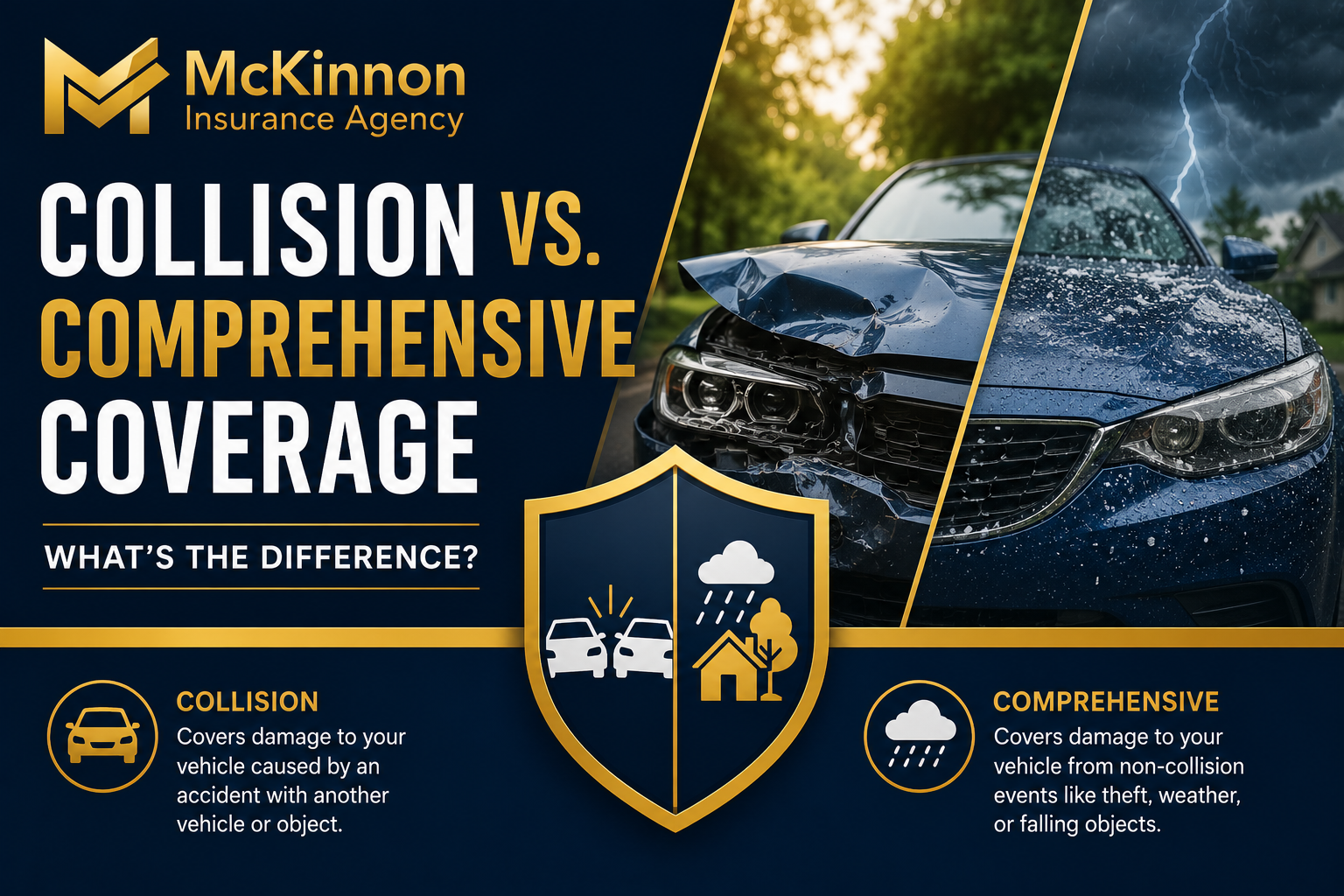
When reviewing your auto insurance policy, you’ve probably seen the terms “collision coverage” and “comprehensive coverage.” While both help protect your vehicle, they cover very different types of losses.
Understanding the difference can help you make more informed decisions about your coverage and avoid surprises if you ever need to file a claim.
If you’re still unsure about the difference between liability insurance and full coverage, our article on Liability vs. Full Coverage Auto Insurance explains how collision and comprehensive coverage fit into a full coverage policy.
Link: https://joelmckinnon.com/liability-vs-full-coverage-auto-insurance/
Let’s take a closer look at what each coverage does—and doesn’t—cover.
What Is Collision Coverage?
Collision coverage helps pay to repair or replace your vehicle after an accident involving another vehicle or object.
Examples of collision claims include:
- Hitting another vehicle
- Backing into a pole
- Striking a guardrail
- Rolling your vehicle
- Single-car accidents
Unlike liability insurance, collision coverage helps pay for damage to your own vehicle regardless of who caused the accident.
For many drivers, collision coverage provides valuable protection against unexpected repair bills.
What Is Comprehensive Coverage?
Comprehensive coverage helps protect your vehicle from losses that aren’t caused by a collision.
Common comprehensive claims include:
- Theft
- Fire
- Vandalism
- Hail damage
- Falling objects
- Flood damage
- Animal collisions
For example, if you hit a deer or a tree branch falls on your vehicle during a storm, comprehensive coverage may help pay for the damage.
Comprehensive coverage is often one of the most affordable coverages on an auto insurance policy relative to the protection it provides.
Collision vs. Comprehensive: A Simple Example
Imagine you’re driving home and accidentally slide into a guardrail during a snowstorm.
That would typically be covered by collision coverage.
Now imagine your parked vehicle is damaged by hail overnight.
That would typically be covered by comprehensive coverage.
The easiest way to remember the difference is:
- Collision = Your vehicle hits something.
- Comprehensive = Something happens to your vehicle.
Do You Need Both Coverages?
Whether you need collision and comprehensive coverage depends on several factors, including:
- Your vehicle’s value
- Whether you have a loan or lease
- Your financial situation
- Your tolerance for risk
If you have a newer vehicle or couldn’t easily replace it out of pocket, carrying both coverages may make sense.
Our article, How Much Auto Insurance Do I Need?, discusses how vehicle value and personal finances can impact coverage decisions.
Link: https://joelmckinnon.com/how-much-auto-insurance-do-i-need/
Are Collision and Comprehensive Required?
State law generally does not require collision or comprehensive coverage.
However, if your vehicle is financed or leased, your lender will often require both coverages until the loan is paid off.
According to the National Association of Insurance Commissioners, lenders frequently require physical damage coverage to protect their financial interest in the vehicle.
External Link: https://content.naic.org/consumer/auto-insurance.htm
What About Deductibles?
Both collision and comprehensive coverage typically include deductibles.
Your deductible is the amount you pay out of pocket before insurance begins paying for a covered loss.
For example:
- $500 deductible
- $1,000 deductible
- $2,000 deductible
Generally:
- Higher deductible = Lower premium
- Lower deductible = Higher premium
Choosing the right deductible is an important part of balancing protection and affordability.
Can Collision and Comprehensive Affect Your Premium?
Yes.
Because collision and comprehensive coverage help protect your vehicle, adding them generally increases the cost of your policy.
If you’ve recently noticed higher premiums, our article Why Did My Auto Insurance Rates Go Up? explains several factors that may be contributing to increased insurance costs.
Link: https://joelmckinnon.com/why-did-my-auto-insurance-rates-go-up/
There may also be opportunities to offset some of those costs through discounts.
Our article 10 Car Insurance Discounts You Might Be Missing highlights several ways drivers may be able to save money on their policies.
Link: https://joelmckinnon.com/car-insurance-discounts-you-might-be-missing/
What Does Full Coverage Actually Mean?
Many drivers refer to collision and comprehensive coverage as “full coverage.”
In reality, full coverage usually means a combination of:
- Liability coverage
- Collision coverage
- Comprehensive coverage
Understanding this distinction can help ensure you’re purchasing the protection you expect.
According to the Insurance Information Institute, many consumers misunderstand what “full coverage” actually includes.
External Link: https://www.iii.org/article/understanding-your-auto-insurance-policy
The Bottom Line
Collision and comprehensive coverage both play important roles in protecting your vehicle, but they cover different types of losses.
Collision coverage helps pay for damage caused by accidents.
Comprehensive coverage helps protect against theft, weather damage, vandalism, animal collisions, and other non-collision events.
If you’re unsure whether your current coverage is appropriate for your vehicle and financial situation, an auto insurance review can help you better understand your options.
Link: https://joelmckinnon.com/auto-insurance-dover-oh/
At McKinnon Insurance, we’re committed to helping Ohio drivers understand their coverage and make informed insurance decisions.


