

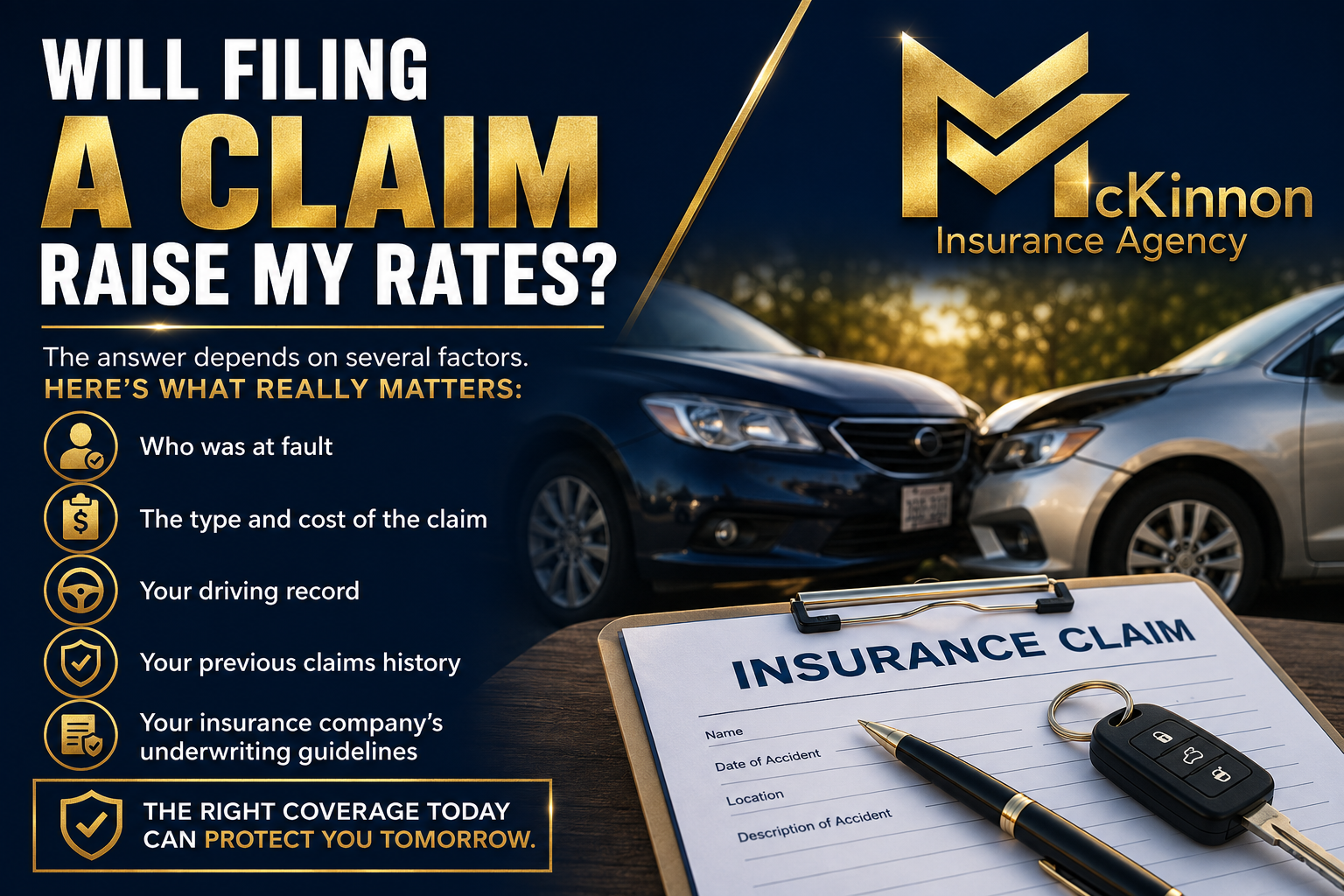
After a car accident, one of the first questions many drivers ask isn’t about the damage to their vehicle—it’s whether filing an insurance claim will cause their premium to increase.
The truth is, there’s no one-size-fits-all answer.
Whether your insurance rates increase after a claim depends on several factors, including who was at fault, your claims history, the severity of the damage, and your insurance company’s underwriting guidelines.
Understanding how claims may affect your premium can help you make informed decisions before you ever need to use your insurance.
Does Every Claim Increase Your Insurance Rates?
No.
Not every claim automatically results in a higher premium.
Insurance companies consider many factors when reviewing a claim, including:
- Who was at fault
- The type of claim
- The cost of the claim
- Your driving history
- Your previous claims history
Some claims have little or no impact, while others may affect your premium more significantly.
Does an At-Fault Accident Matter More?
In many cases, yes.
When you’re responsible for an accident, insurance companies may view you as a higher risk than someone with a clean driving record.
That doesn’t necessarily mean your rates will increase dramatically, but fault is one of the factors insurers commonly evaluate when calculating future premiums.
According to the Insurance Information Institute, insurance companies consider a variety of factors when determining auto insurance premiums, including your driving record, claims history, vehicle, location, and the coverages you choose. Because every company evaluates risk differently, filing a claim doesn’t automatically mean your rates will increase.
What About an Accident That Wasn’t Your Fault?
Many drivers assume they’ll automatically see an increase in their premium after any claim.
That’s not always the case.
The outcome depends on the circumstances of the accident, state regulations, and your insurance company’s rating practices.
If you’ve recently been involved in an accident, it’s still important to report it promptly and discuss your options with your insurance company or agent.
Should You Pay Out of Pocket Instead?
Some drivers consider paying for minor damage themselves to avoid filing a claim.
While that may make sense in certain situations, it’s important to consider:
- The total repair cost
- Your deductible
- Whether additional damage may be discovered later
- Your financial situation
Every accident is different, so there’s no universal answer.
Why Your Deductible Matters
Your deductible is the amount you’re responsible for before certain coverages begin paying for repairs.
Choosing the right deductible can make a big difference when deciding whether filing a claim makes financial sense.
If you’re wondering whether a higher deductible is right for you, our article Should I Raise My Deductible? explains the advantages and disadvantages.
Having the Right Coverage Matters
Many drivers focus on price when purchasing auto insurance, but having the right coverage before an accident can make a significant difference when you need to file a claim.
If you’re unsure whether your current policy provides enough protection, our article How Much Auto Insurance Do I Need? can help you better understand your options.
If you’re still learning the difference between physical damage coverages, our article Collision vs. Comprehensive Coverage explains when each type of coverage applies.
When Should You Contact Your Insurance Company?
Even if you’re unsure whether you’ll file a claim, contacting your insurance company or agent after an accident is often a smart first step.
They can explain your coverages, answer questions about the claims process, and help you understand your options before you make a decision.
If you’ve recently been in an accident, our article What to Do After a Car Accident walks you through the important steps to take immediately after a crash.
Review Your Policy Before You Need It
The best time to understand your insurance isn’t after an accident—it’s before one happens.
According to the National Association of Insurance Commissioners, reviewing your policy regularly helps ensure your coverage continues to match your needs as your life changes.
The Bottom Line
Filing an insurance claim doesn’t automatically mean your rates will increase.
Every situation is unique, and many factors influence how claims are evaluated.
The most important thing is making sure you have coverage that fits your needs before an accident occurs.
If you’re unsure whether your current policy provides the protection you’re looking for, the team at McKinnon Insurance is happy to review your coverage and answer your questions.
Learn more about our Auto Insurance solutions here:


